
The Echo of the Drowning Woman
The FallFollows the recurring motif of the woman's suicide on the Pont Royal, from its occurrence to its haunting presence in Clamence's life.
increasing Bearing strength in each event
 decreasing
Bearing strength in each eventdecreasingThe Night on the Pont Royal
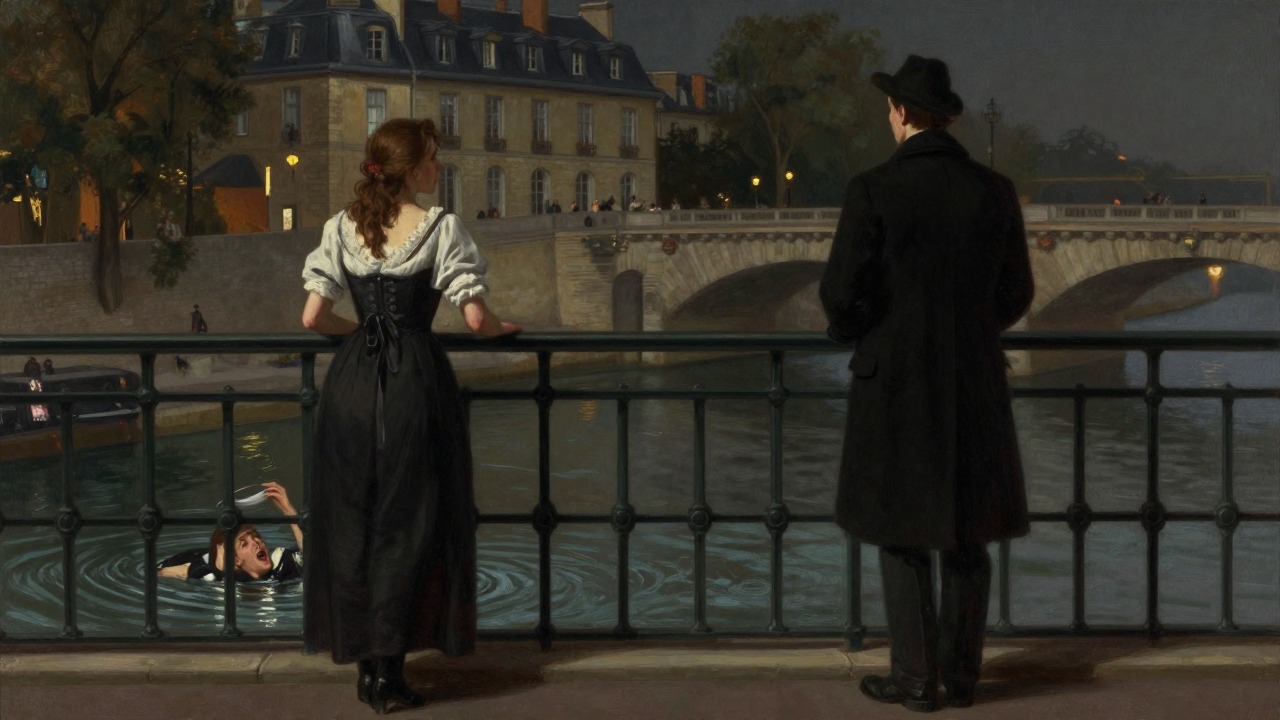
The anonymous victim
A slim figure in black
Clamence crossed the Pont Royal after leaving a mistress. He saw a young woman leaning over the railing, her back to him. He was stirred but passed by. Then he heard the body hit the water, a cry repeated, then silence. He didn't turn around. He stood trembling, then walked away.
The decision to ignore
He told himself "Too late, too far..." and continued home. He never reported it. The woman's identity remained unknown. This inaction became the core of his guilt, a secret he carried for years.
Suppressed Memory
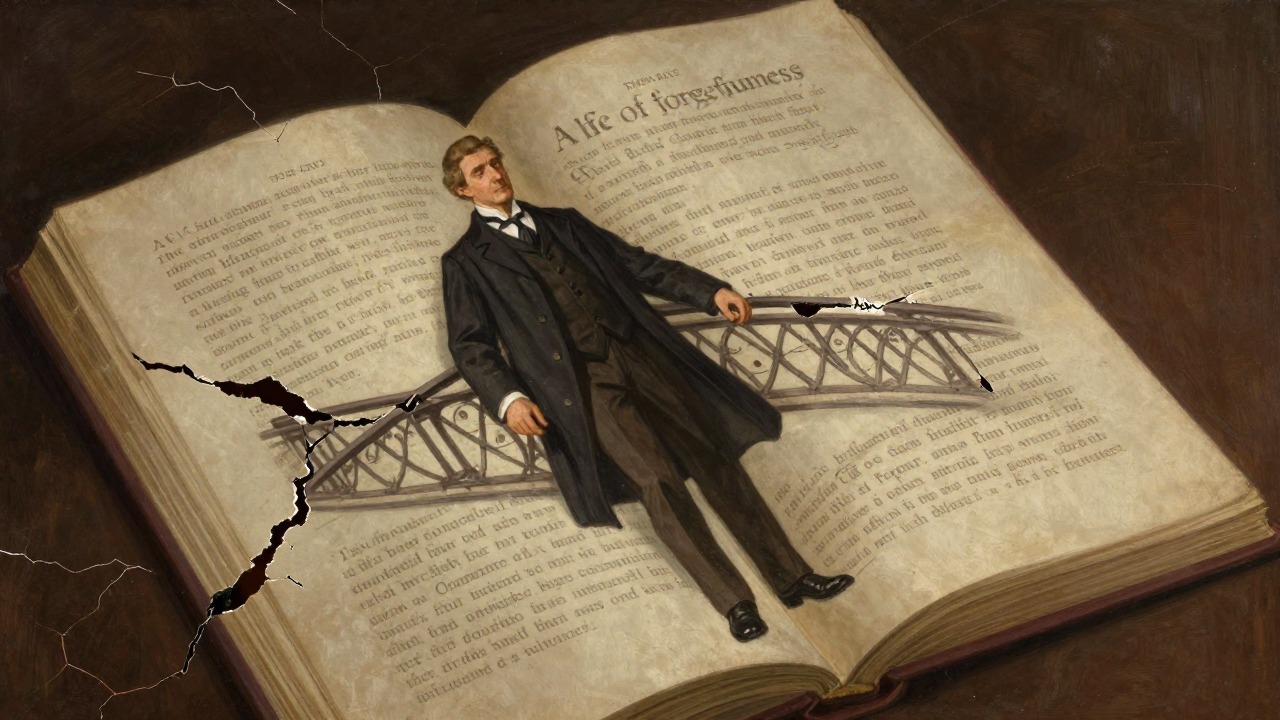
The buried secret
A life of forgetfulness
Clamence lived as if nothing had happened. He continued his successful law practice, his charitable acts, his love affairs. He had an extraordinary ability to forget, and he forgot the woman on the bridge. He was happy, or so he believed.
The cracks appear
But gradually, his memory returned. He began to see the hypocrisy in his life. The laugh on the Pont des Arts was a catalyst, but the drowning woman was the deeper wound. He realized that he had not been innocent, and that the cry had never ceased.
The Cry on the Ocean
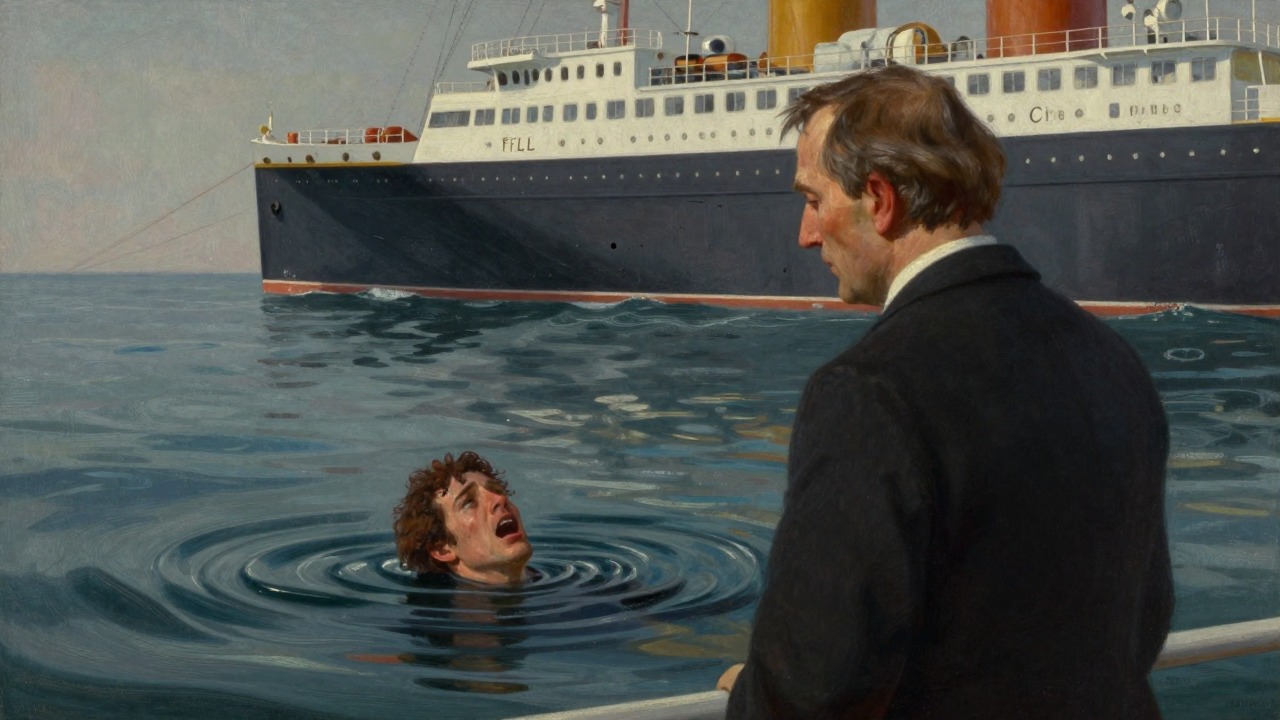
The return of the repressed
A black speck on the water
On an ocean liner, Clamence saw a black speck and thought of a drowning person. His heart pounded. He realized that the cry from the Seine had traveled with him, across the Channel, over the Atlantic, waiting for him. It was the bitter water of his baptism.
The inescapable guilt
He understood that he was not cured. The cry would continue to await him on all waters. The fog of Amsterdam, the canals, the sea—all carried the echo of that night. He had to live with the little-ease of his guilt.
The Final Invocation
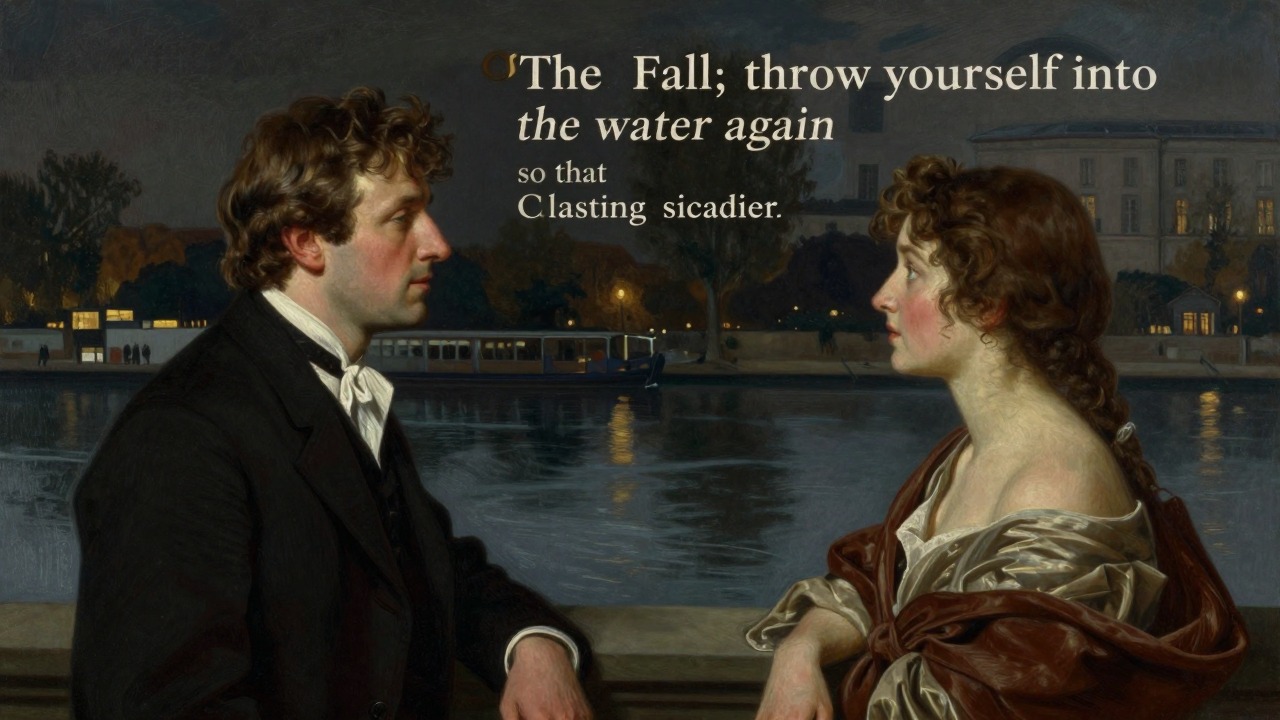
The challenge to the listener
A parallel story
Clamence asks his interlocutor, a Parisian lawyer, to tell him what happened on the Seine one night. He wants to hear the other's failure. He utters the words that have echoed in his nights: "O young woman, throw yourself into the water again so that I may a second time have the chance of saving both of us!"
The impossibility of redemption
He acknowledges that it's too late. The water is cold, and the chance is gone. The drowning woman remains a symbol of his lost opportunity for heroism and his perpetual guilt. He ends with a bitter acceptance of the impossibility of change.
Past midnight, a fine rain, a few years before the laugh
During the years of his success after the incident
During a sea voyage, after his decadent period
At the end of his confession, in his Amsterdam room
